
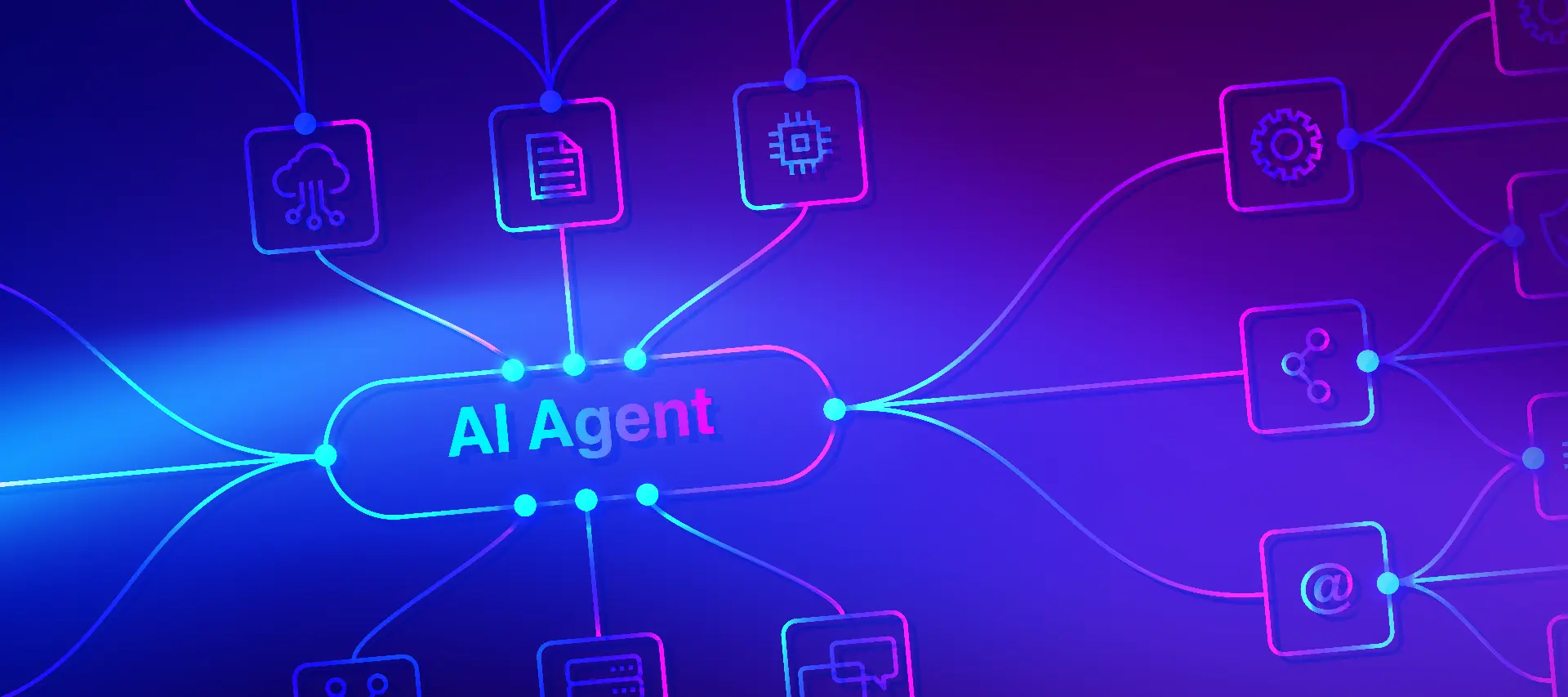
Experimentation to Production: Autonomous Execution with Agentic AI
With Agentic AI going mainstream, organizations can gradually embrace new capabilities to move beyond automation to autonomous decision-making and execution. These intelligent agents interact with tools, APIs, and data environments to complete complex tasks, solve problems, and learn from context. From human-supervised copilots to self-directed autonomous operations, agentic AI redefines productivity and unlocks new value in enterprise operations and customer services.
From human-supervised copilots to self-directed autonomous operations, agentic AI redefines productivity and unlocks new value in enterprise operations and customer services.
The evolution now is pivoted by the contextual autonomy, where AI agents dynamically plan, reason, and execute multi-step workflows with minimal or no human intervention. Unlike scripted automation, these systems integrate disparate data sources to make judgment calls, adapt to novel challenges, and self-optimize outcomes. Key use cases include:
Key use cases
- IT operations bots predicting and resolving incidents before impact
- Customer service agents resolving end-to-end issues while refining strategies based on interaction patterns
- Autonomous research agents synthesizing insights across domains
- AI supply chain agents detecting shortages, negotiating with vendors, and placing orders
- Compliance bots gathering and analyzing evidence and producing gap reports
Crucially, continuous learning from environmental context enables these systems to tackle unplanned scenarios and unlock new operational models. For organizations, deploying purpose-built agentic systems translates to significant efficiency gains, accelerated innovation cycles, and sustainable competitive advantage, thus fundamentally reshaping how value is created across the digital enterprise.
Early adopters should mitigate risks like unpredictable behaviors or toolchain fragility by implementing layered oversight and adaptive safety protocols. To navigate complexity and trust gaps in autonomous systems, businesses require proven frameworks for orchestration, continuous validation, and ethical governance. This is essential for a seamless transition from theoretical agentic capabilities to auditable, value-driven operations and production-ready systems.